The Ultimate Care and Maintenance Guide: How to Clean a Foam Pogo Jumper?
So, your child’s favorite indoor energy-burner has ventured outside. What started as a clean, living-room-safe foam bungee hopper has just spent the afternoon bouncing through backyard dirt, muddy patio puddles, or sticky driveway pollen.
As a parent, your immediate concern isn’t just the trail of footprints heading back toward your clean rugs—it’s protecting the toy itself. If you own a premium foam pogo jumper (like a Flybar or Kidoozie), you already know these toys are a godsend for building gross motor skills and keeping kids active. But because they are made of highly porous, textured foam, they act like a magnet for dirt, dust, and grime.
Can you wash them without snapping the bungee? Will water ruin the built-in squeaker?
Cleaning a foam pogo jumper is quick and highly effective when done by hand. Because high-density EVA foam is water-resistant, you can easily remove dirt, mud, and bacteria using a microfiber cloth, warm water, and a few drops of mild dish soap. To protect the integrity of the toy, you must avoid harsh chemical solvents, never submerge the base entirely in water (to protect the internal air-squeaker), and always allow it to air-dry completely away from direct sunlight.
Why You Should Clean Your Foam Pogo Jumper Regularly
Foam pogo jumpers (like popular Flybar models) are exposed to:
- Outdoor dirt, grass stains, and mud
- Indoor dust, pet hair, and food spills
- Sweat and skin oils from little hands
- Bacteria and mold if stored damp
Benefits of proper cleaning:
- Prevents slips from dirty foot platforms
- Extends the life of foam padding and bungee cords
- Reduces odors
- Maintains vibrant colors and appearance
- Lowers allergy triggers for sensitive kids
- Protects floors from transferred dirt and grit
Neglected jumpers wear out faster, look worn, and can become unsafe. A clean pogo jumper is a safer pogo jumper.
Materials You’ll Need
Gather these household items before starting:
- Mild dish soap or laundry detergent
- Warm water
- Soft microfiber cloths or sponges
- Soft-bristle brush (toothbrush works for tight spots)
- White vinegar (for odor and mild disinfection)
- Baking soda (for stubborn smells)
- Garden hose or spray bottle
- Towels for drying
- Optional: Foam-safe disinfectant spray, magic eraser (for tough marks)
Avoid harsh chemicals, bleach, abrasive scrubbers, or high-pressure washers.
To help you maintain a flawless, hygienic toy collection, this comprehensive guide lays out a step-by-step cleaning blueprint, breaks down the science of foam maintenance, and provides actionable tips to prolong the lifespan of your jumper. How to clean a foam pogo jumper?
1. The Anatomy of a Foam Jumper: What Can (and Can’t) Get Wet
Before grabbing your cleaning supplies, it helps to understand what materials you are working with. A modern indoor-safe pogo jumper is made of three primary components:
                  [ FOAM JUMPER MATERIAL MAP ]

     (EVA Foam Handles)  ──► Non-porous, traps hand oils & sweat.
             │
             ▼
          =======
          |  |  |
          |  |  |        ──► (Latex Rubber Bungee)
          |  |  |            Highly elastic, sensitive to harsh chemicals.
          =======
         __||_||__
        [_________*]     ──► (EVA Foam Block Base)
             ▲               Tough, but houses the internal air-squeaker.
             │
      [INTERNAL SQUEAKER] ──► MUST NOT BE SUBMERGED IN WATER.
- High-Density EVA Foam (Base & Handles): Ethylene-Vinyl Acetate is an incredibly durable, closed-cell foam. It is naturally water-resistant, meaning mud and spills stay on the surface rather than soaking deep into the core. However, the texture of the foam can trap fine dirt particles.
- Latex Rubber or TPR (Bungee Cord): The stretchy band that provides the resistance is made of highly elastic rubber. This material is incredibly tough against pulling forces but can degrade, become brittle, or lose its elasticity if exposed to harsh industrial chemicals or intense UV heat.
- The Internal Air-Squeaker: Tucked deep inside the foam base is a small plastic reed mechanism that creates that satisfying “squeak” with every hop. While a splash of surface water won’t hurt it, flooding this chamber with water will mute the sound permanently or breed trapped mold.
2. The Step-by-Step Foam Pogo Deep Clean
If your child’s jumper looks less like a colorful toy and more like a backyard relic, follow this safe, non-destructive deep-cleaning sequence to restore it to mint condition.
What You Will Need:
- Two clean microfiber cloths or soft sponges.
- A bowl of warm water.
- A few drops of mild, grease-cutting dish soap (e.g., Dawn) or gentle baby shampoo.
- An old, soft-bristled toothbrush (for stubborn tread dirt).
- A dry towel.
Step 1: The Pre-Rinse Wipe Down
Moisten your first microfiber cloth in the warm water. Wring it out thoroughly so it is damp, not dripping wet. Gently wipe down the entire pogo jumper from top to bottom—starting with the handles, moving down the bungee cord, and finishing at the base. This initial pass lifts loose dust, grass clippings, and surface dirt without spreading it around.
Step 2: Apply the Gentle Soap Solution
Add 2–3 drops of mild dish soap to your bowl of warm water and stir until it bubbles. Dip your cloth into the soapy water, wring it out, and begin scrubbing the foam surfaces in a circular motion. Focus heavily on the handlebar grips, which accumulate oils, sweat, and stickiness from snacks.
Step 3: Scrub the Base Treads (The Toothbrush Trick)
Flip the pogo jumper over to inspect the bottom traction pad. If mud or dirt is packed into the textured grooves, your cloth won’t reach it. Dip an old, soft-bristled toothbrush into the soapy water and gently scrub the grooves. The bristles will easily dislodge caked-on dirt without tearing or pitting the EVA foam.
Step 4: Rinse Thoroughly with a Damp Cloth
⚠️ Critical Warning: Never rinse your foam pogo jumper by holding it directly under a running sink faucet or spraying it with a backyard garden hose. Excess water will flood the internal squeaker chamber.
Instead, rinse your microfiber cloth completely free of soap under the tap, wring it out until damp, and wipe down the jumper a final time to remove all remaining soapy residue. Soap left on the foam can dry into a slippery film, compromising your child’s grip during their next jumping session.
3. The Drying Protocol: Preserving the Bungee
How you dry a pogo jumper is just as important as how you clean it. Improper drying can permanently damage the structural materials. What surface is best for using a pogo jumper?
       [ THE DO'S AND DON'TS OF DRYING FOAM ]

   DO:  Hand-dry with a towel, then air-dry indoors or in a shady spot.
   DO:  Position the base upside down so trapped moisture drains out.

   DON'T: Leave it under direct, blazing sunlight (UV rays degrade latex).
   DON'T: Use a high-heat hair dryer (warps the EVA foam geometry).
Once the soap is completely rinsed away, take a clean, dry bath towel and firmly press it into the foam components to absorb as much surface moisture as possible.
Next, place the jumper in a well-ventilated, indoor area or a shaded outdoor patio to air-dry completely. Avoid the temptation to speed up the process by leaving it out in the baking afternoon sun; prolonged UV exposure dries out the elastic latex bungee, leading to micro-cracks and eventual snapping. Similarly, keep it away from high-heat sources like space heaters or hot hair dryers, which can warp or melt the foam structure.
4. Disinfecting and Deodorizing Sticky Handles
Let’s face it—kids aren’t always thinking about hand hygiene mid-play. Foam handlebars frequently absorb sweat, dirt, and sugary juice residues, which can lead to bacteria growth and sour odors over time.
If the handles require an extra layer of sanitization beyond simple dish soap, do not spray them with industrial bleach or concentrated aerosol disinfectant sprays. These chemicals can strip the vibrant colors from the foam and break down the adhesive holding the grips in place. How to make pogo jumpers safer for kids
- The Safe Solution: Mix a 50/50 solution of water and white vinegar in a spray bottle. Mist a tiny amount onto your microfiber cloth (never spray the toy directly) and wipe down the handles. White vinegar is a fantastic, non-toxic, child-safe sanitizer that naturally neutralizes odors. The strong vinegar scent will dissipate completely within 15 minutes, leaving the handles fresh, clean, and hygienic.
What NOT to Do When Cleaning
- Never put a foam pogo jumper in a washing machine or dishwasher.
- Avoid bleach, ammonia, or strong solvents — they degrade foam and elastic.
- Do not use high-pressure washers — they can tear foam or force water deep inside.
- Skip soaking the entire unit.
- Don’t store in direct sun or hot cars — UV rays and heat break down materials faster.
How Often Should You Clean a Foam Pogo Jumper?
- Light Use: Wipe down weekly.
- Daily/Heavy Use: Quick clean after every session + deep clean monthly.
- Outdoor Only: Clean after every use or at least weekly.
- Indoor Only: Monthly deep clean is usually enough.
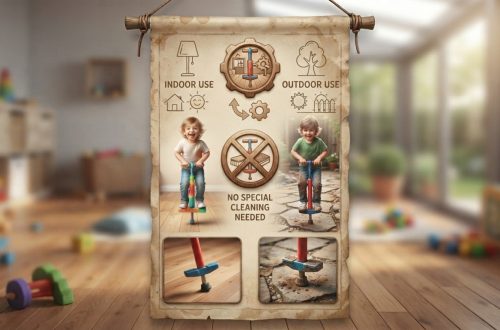
Indoor vs Outdoor Cleaning Tips
Indoor Users (apartments, basements):
- Focus on dust and pet hair.
- Use dry methods first (vacuum attachment or lint roller).
- Minimal water to protect home floors.
Outdoor Users:
- Expect more mud and grass.
- Clean more frequently.
- Pay attention to hidden dirt in seams.
Maintenance Tips to Keep It Cleaner Longer
- Store indoors or in a dry garage.
- Use a storage bag or hang it on a wall hook.
- Teach kids to wipe feet before jumping indoors.
- Place a small mat at the jumping area.
- Rotate usage between multiple jumpers if you have them.
- Inspect and clean bungee cords every 3 months.
Recommended Foam Pogo Jumpers That Are Easy to Clean
Flybar My First Foam Pogo Jumper — Easiest to clean thanks to smooth, high-quality foam and simple design. Popular across the USA for both indoor and outdoor families.
Flybar Maverick and Kidoozie models also feature easy-wipe surfaces and durable construction.
Benefits of a Well-Maintained Pogo Jumper
- Longer product lifespan (2–4+ years with good care)
- Better bounce performance
- Safer, more hygienic play
- Higher resale value if you ever sell it
- Happier kids and peace of mind for parents
Frequently Asked Questions (FAQ)
Can I put a foam pogo jumper in the washing machine or dishwasher?
Absolutely not. The mechanical agitation of a washing machine spin cycle will warp, tear, and permanently deform the EVA foam base. Furthermore, the extreme heat of a dishwasher will melt the internal plastic squeaker and destroy the structural integrity of the latex bungee cord. Stick strictly to gentle hand-cleaning.
Water got inside the squeaker, and now it won’t make sound. Is it ruined?
Not necessarily. If water accidentally finds its way into the air chamber, it will temporarily muffle the reed mechanism. To fix this, turn the pogo jumper completely upside down so the bottom of the base faces the ceiling, and prop it up in a dry, warm room for 24 to 48 hours. Gravity will naturally drain the water out of the air vents, restoring the classic squeak once the internal components are fully dry.
How often should I clean my child’s foam jumper?
For indoor-only toys, a quick wipe down of the handlebars with a damp cloth once every few weeks is plenty to manage standard dust and hand oils. However, if the jumper is taken outdoors onto concrete, asphalt, or dirt surfaces, it should be cleaned immediately upon coming back inside to prevent tracking outdoor allergens, grime, and mud onto your clean interior floors.
Summary Maintenance Checklist for Parents
- [ ] Clean strictly by hand using warm water and mild dish soap.
- [ ] Use an old toothbrush to clear dirt from the bottom traction pads.
- [ ] Never submerge the base or hold it directly under running water.
- [ ] Avoid harsh chemical cleaners, bleach, or boiling water.
- [ ] Air-dry the toy in the shade to protect the elastic bungee from UV damage.
By spending just five minutes following this gentle cleaning routine, you can keep your child’s foam pogo jumper looking brand new, smelling fresh, and operating safely. Protect your investment, maintain excellent home hygiene, and let your kids jump, bounce, and play with complete confidence!
Keywords: how to clean a foam pogo jumper, wash flybar first foam pogo stick, clean kidoozie bungee hopper handles, child safe toy disinfecting instructions, eva foam cleaning solutions, fix water logged pogo stick squeaker, indoor active toy maintenance tips.