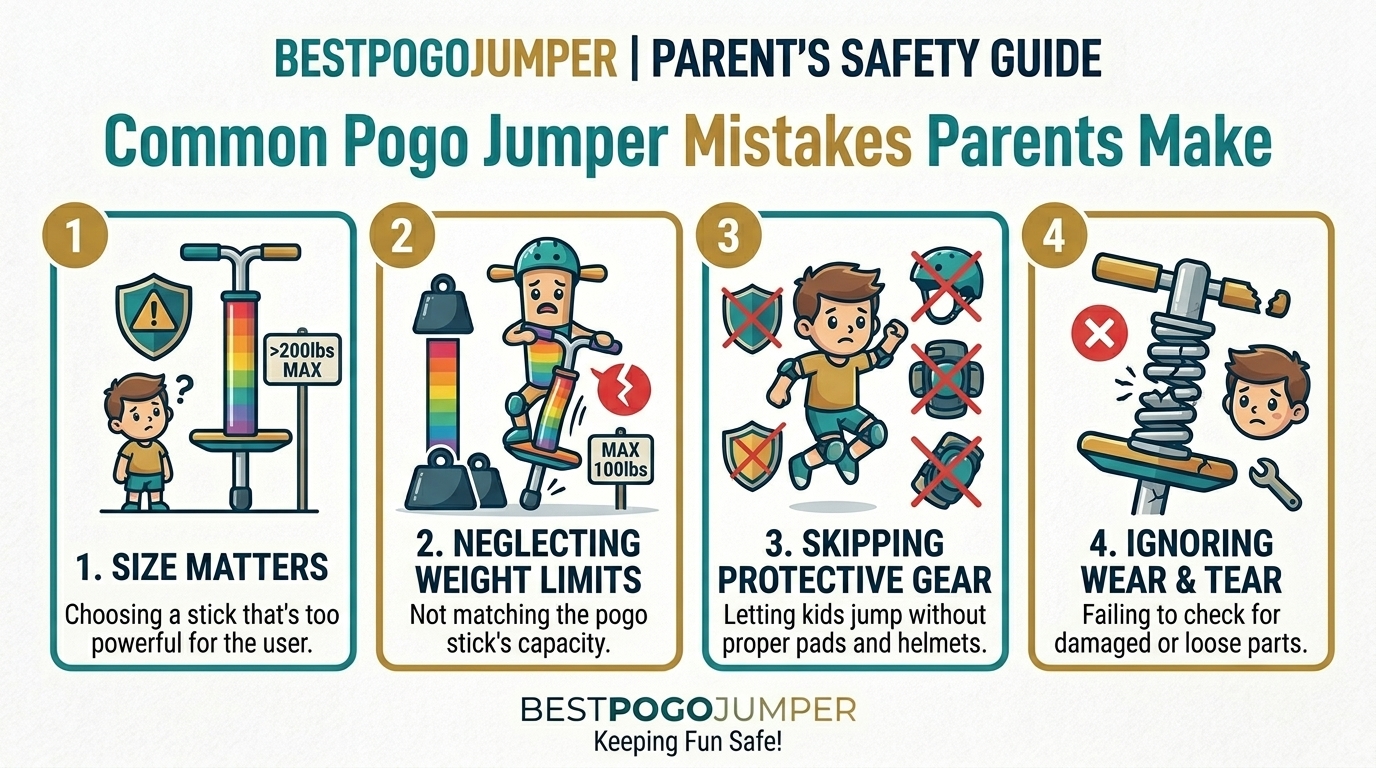
Whether you are unboxing a beginner-friendly foam pogo jumper for your toddler or gifting a classic spring-loaded pogo stick to an energetic pre-teen, bouncing toys are an incredible way to burn energy. Common pogo jumper mistakes parents make. They pull kids away from screens, supercharge core strength, and masterfully develop bilateral coordination and balance.
However, because pogo jumping looks simple, many parents overlook the mechanical and safety nuances required for a safe ride. From buying the wrong style for a child’s weight development to neglecting spatial guardrails, small oversight mistakes can turn a fun afternoon into a frustrating—or hazardous—ordeal.
As parents, we want our kids to play actively and stay off screens, but many well-meaning moms and dads unknowingly put their children at risk or limit the fun with simple mistakes. This comprehensive guide covers the most common pogo jumper mistakes parents make, backed by safety best practices, real parent experiences, and expert tips. Avoid these pitfalls to keep playtime safe and enjoyable while helping your child develop essential motor skills.
If you want to ensure your child gets maximum fun out of their bouncer while keeping safety front and center, avoid these common pogo jumper mistakes parents make.
1. Starting on the Wrong “Pogo Tier” (Age vs. Hardware Mismatch)
The single biggest mistake parents make happens before the toy even leaves the store box: buying a traditional metal spring pogo stick for a child who should still be on a foam core jumper.
                  [ THE POGO JUMPING PROGRESSION ]

  AGES 3–6 (Beginner)  ──► Foam Pogo Jumper (Soft base, elastic stretch bands)
  AGES 5–9 (Intermediate)─► Light-Duty Traditional Spring Stick (Targeted weight)
  AGES 10+ (Advanced)  ──► Heavy-Duty / Air-Powered High-Rebound Pro Sticks
- The Mistake: Parents often buy a traditional metal pogo stick for a 5-year-old, thinking they will “grow into it.” Traditional pogo sticks rely on a rigid internal coil spring that requires a minimum amount of downward body weight to compress. If a child is too light, the stick won’t budge. The child will wobble, slide off, and lose interest.
- The Fix: For kids aged 3 to 6, start exclusively with a foam pogo jumper (like the My First Flybar style). These use a soft, expanding high-density foam block attached to a flexible elastic band. They provide a low, forgiving bounce height (usually under 12 inches) that focuses on early motor coordination without the risk of a heavy metal frame.
2. Neglecting Weight Threshold Boundaries
Every pogo jumper has a strict operational weight window. Common pogo jumper mistakes parents make. Exceeding or falling short of these limits can destroy the toy’s performance or break the internal mechanisms.
- The Mistake: Letting older, heavier siblings ride a toddler’s foam jumper, or forcing a lightweight child onto an adult-rated stick. While many high-density foam bases claim they can support up to 250 lbs, heavy users stretching the elastic hoses past their natural limits overwork the materials, causing the elastic to snap or lose its memory.
- The Fix: Always verify the optimal weight range rather than just looking at the absolute maximum capacity.
- Too light: The child can’t compress the spring, leading to tip-overs.
- Too heavy: The child bottoms out the bounce instantly, which sends a jarring shock straight up into their developing knees and ankles.
3. Allowing Indoor Use Near Critical Obstacles
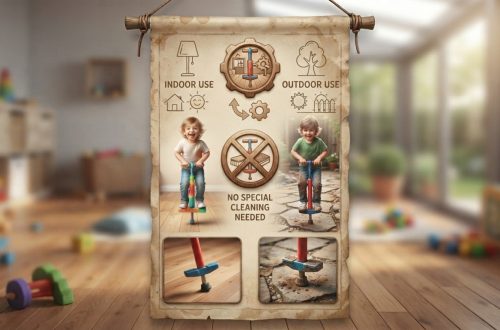
Because foam pogo jumpers are explicitly advertised as “indoor safe” because they won’t scratch hardwood floors or scuff tile, parents lower their spatial awareness guardrails.
  [ THE SAFE ZONE RADIUS CLEARANCE ]

  Incorrect: Jumping right next to coffee tables, glass TV stands, or area rugs.
  Correct: Clear a radius equal to twice your child's height in all directions.
- The Mistake: Allowing your child to hop right next to a glass coffee table, near kitchen island edges, or on top of loose throw rugs. When children get fatigued, they don’t bounce straight up and down; they “drift” horizontally. A loose throw rug can slip out instantly under the shifting lateral pressure of a foam pad.
- The Fix: Even if a toy is indoor-friendly, treat it with outdoor space protocols. Ensure the jumping zone is a completely flat, hard floor surface entirely free of area rugs, loose power cables, or low furniture edges.
4. Overlooking Basic Protective Footwear
It is incredibly easy to let a child step right onto their pogo jumper while wearing slick indoor slippers, or even worse, completely barefoot.
- The Mistake: Allowing kids to jump with bare feet, slick nylon socks, or loose sandals. Bare toes can easily slip off the traction surface and get pinched beneath the frame, while loose shoes compromise ankle stability.
- The Fix: The best way to jump safely is with snug, rubber-soled athletic sneakers that lock down the ankle and provide an aggressive grip against the footpad texturing. If they are practicing indoor balance skills on a soft toddler foam block, have them jump in bare feet rather than smooth socks to keep their skin friction high against the foam padding.
5. Ignoring Bad Balance Posture and Fatigue Signs
Bouncing on any pogo platform requires a stable core, upright alignment, and centered weight distribution over the centerline of the tool. Common pogo jumper mistakes parents make.
- The Mistake: Allowing children to hunch their shoulders forward, lean over the handlebars, or stick their rear ends out while jumping. This shifting center of gravity causes the pogo stick to slide out backward, launching the child forward face-first. Additionally, parents often encourage long endurance sessions when a child’s stabilizing muscles are spent.
- The Fix: Teach your child the Upright Anchor Posture: keep your shoulders back, eyes looking straight ahead (never straight down at your feet), and pull the handlebars tight up toward your waist line. Limit early introductory sessions to 10-minute bursts. Fatigue leads to sloppy posture, and sloppy posture on a bouncer leads to immediate falls.
High-Level Pogo Safety Comparison Matrix
| Mistake Type | Potential Risk | Corrective Prevention Step |
| Wrong Age Tier | Heavy metal frame can cause bruising or injuries if fallen on. | Stick to soft high-density foam jumpers until age 5–6. |
| Loose/Slick Footwear | Foot slips off mid-bounce, leading to ankle roll or toe pinches. | Mandate tight athletic sneakers or bare feet on textured pads. |
| No-Helmet Policy | Concussions from tipping backward onto hard driveways or patios. | Enforce standard bicycle helmet use for all metal spring sticks. |
| Ignoring Fatigue Signs | Spinal compression or muscle strain from sloppy, slouched posture. | Cap early play periods at 10 minutes to protect young muscle stamina. |
Overlooking Maintenance and Wear-and-Tear
Foam jumpers are durable but not indestructible. Parents forget to inspect for cracks in foam, loose bungee cords, worn grips, or weakened springs (in hybrid models).
A failing toy can cause sudden collapses or loss of control.
Maintenance checklist:
- Inspect before every use.
- Clean foam and handles regularly.
- Store indoors away from extreme heat/sun.
- Replace when parts show significant wear.
Poor Technique Instruction (Letting Them “Figure It Out”)
Many parents hand over the pogo jumper and expect instant mastery. Kids grip too tightly, lean forward, or bounce irregularly, leading to quick fatigue, poor form, or injuries.
Correct basics:
- Stand tall with feet on the pads, knees slightly bent.
- Hold handles firmly but not death-gripping.
- Keep the jumper vertical.
- Bounce with small, controlled movements first.
- Look straight ahead, not down.
Demonstrate yourself or watch tutorial videos together. Praise effort and small improvements to build confidence.
Bonus Benefits When Done Right
Avoiding these mistakes turns pogo jumper play into a powerhouse for:
- Gross motor skill development
- Balance and coordination
- Core strength and posture
- Outdoor/indoor active play that fights screen time
- Confidence building and fun family bonding
Many parents report improved focus, better sleep, and tons of giggles once they dial in safe habits.
Frequently Asked Questions (FAQ)
Are the squeaking noises in foam pogo jumpers safe, or a sign of wear?
The loud squeaking noise built into most toddler foam jumpers is a deliberate, engineered design feature using a small internal reed bellows. It acts as an audio reward loop to keep kids engaged while implicitly helping parents track their kid’s jumping speed and cadence from another room. It is completely normal and not a mechanical defect.
Does jumping on a pogo stick help a child grow taller?
This is a popular parenting myth, particularly on online forums. While regular jumping exercises stimulate healthy bone density development, growth plates, and improve overall spinal posture, it does not chemically alter a child’s genetic height potential. It does, however, build phenomenal core strength, cardiovascular health, and calves!
The Ultimate Parent Pogo Safety Checklist
Before letting your child jump, take five seconds to verify this safety checklist:
- The jumping surface is dry, flat, and clear of stray toys or rugs.
- The child’s shoes are tied tightly with rubber grip soles.
- The handlebars align correctly and are not bent out of symmetry.
- A bicycle helmet is securely buckled if using a spring-loaded vertical stick.
- The child is upright and centered, not slouched over the handle grips.
By keeping these straightforward safety steps in mind, you can turn a classic active toy into a completely safe, skill-building powerhouse that burns energy and keeps your kids smiling for years to come!
Keywords: common pogo jumper mistakes parents make, foam pogo stick safety guidelines kids, best first pogo stick toddlers, prevent pogo stick injuries balance, pediatric motor skills coordination bouncing toys, flybar foam jumper weight limits 2026, indoor active toys posture alignment.