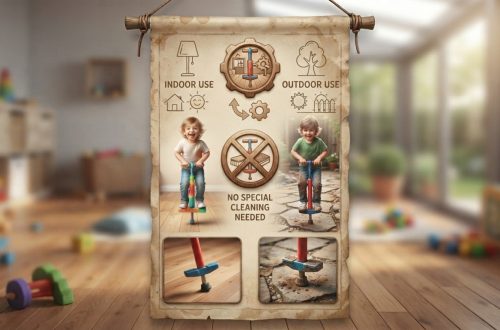
The Definitive Safety Terrain Guide: What Surface Is Best for Using a Pogo Jumper?
The excitement of unboxing a brand-new pogo jumper is an unmatched milestone for a high-energy child. Whether it is a soft foam bungee starter or a classic metal-spring vertical stick, the immediate parental goal is clear: get the kids outside (or in a designated room) to burn off that boundless energy.
However, before your child places their feet on the pegs and takes their first leap, you have to answer a crucial, safety-defining question: Where exactly should they be jumping?
The terrain beneath a pogo jumper directly dictates the quality of the bounce, the stability of the landing, and the lifespan of the equipment. Choosing the wrong surface doesn’t just cut a jumping session short—it can ruin your expensive hardwood floors, damage your pogo stick’s rubber traction tip, or result in sudden slips and falls.
To help establish Pogo Jumper Base as the ultimate authority on active play, this long-form masterclass breaks down the physics of pogo terrain, ranks the best indoor and outdoor surfaces, and identifies the dangerous “no-go” zones every parent must avoid.
1. The Physics of Pogo Friction and Rebound
To understand why surface choice matters, we have to look at how a pogo jumper interacts with the ground. Every jump relies on Newton’s Third Law of Motion: the downward force your child exerts must be met with an equal and opposite upward reaction from the ground.
       [ THE POGO REBOUND INTERACTION ]

            (Downward Compression)
                      │
                      ▼
         [ POGO STICK RUBBER TIP ]
   ───────────────────────────────────────
         [ GROUND SURFACE PLATFORM ]
                      ▲
                      │
             (Upward Kinetic Lift)
A surface needs to deliver two key mechanical properties to guarantee a safe, predictable bounce:
- Structural Rigidness (Rebound Support): A great pogo surface must be completely solid. When the pogo tip impacts the ground, the surface should stay perfectly rigid, forcing the internal spring or bungee cord to compress fully. If the ground itself yields or shifts under the weight, the kinetic energy is absorbed by the earth rather than the toy, causing the stick to feel dead, sluggish, and unstable.
- Frictional Coefficient (Slip Prevention): The bottom of a traditional pogo stick uses a heavy-duty rubber tip to grip the floor. The ground surface must offer enough friction to prevent this rubber tip from sliding sideways upon impact. Smooth, wet, or polished surfaces reduce this friction to zero, causing the stick to suddenly kick out away from the rider.
2. Best Outdoor Surfaces for Metal-Spring Pogo Sticks
Traditional vertical spring pogo sticks generate high-impact forces concentrated onto a single, small rubber tip. For these recreational and pro-tier models, outdoor hardscaping is the premier choice.
Smooth Asphalt Driveways (The Gold Standard)
An asphalt driveway is arguably the safest and most effective outdoor surface for a traditional spring pogo stick. Unlike poured concrete, asphalt has a slightly textured, high-friction composition that locks onto a pogo stick’s rubber tip, preventing slips. It provides excellent rebound support while being forgiving enough to minimize excessive vibrations traveling back up into a child’s knees and ankles.
Clean Concrete Patios and Sidewalks
Solid concrete offers an exceptional rebound platform, allowing children to achieve maximum vertical lift with minimal physical effort. However, when using concrete, ensure the area is clear of structural cracks, deep seams, or lifted expansion joints. Hitting a concrete lip mid-bounce can cause the tip to catch, throwing the jumper off balance.
Level Schoolyards and Public Parks
Wide-open asphalt schoolyards or concrete public park plazas provide fantastic environments for beginners. These spaces give children a wide safety perimeter far away from road traffic, parked cars, or narrow property boundary obstacles, allowing them to focus entirely on perfecting their balance.
3. Best Indoor Surfaces for Foam Bungee Jumpers
If your child is using an indoor-safe foam bungee hopper (such as a Flybar or Kidoozie model) inside an apartment or home, your terrain goals switch from maximizing height to protecting property and controlling acoustics. How to make pogo jumpers safer for kids?
    [INDOOR TERRAIN HIERARCHY FOR FOAM HOPPERS]

    1. Low-Pile Carpets / Large Area Rugs ──► Best acoustic dampening & zero slide.
    2. Interlocking EVA Foam Gym Mats      ──► Maximum shock absorption & ultra-quiet.
    3. Smooth Linoleum / Vinyl Planks      ──► Excellent bounce, but requires a dry floor.
Low-Pile Carpets and Large Area Rugs
A low-pile carpet or a heavy woven area rug is the absolute best environment for indoor foam bouncing. The carpet fibers weave slightly into the textured foam base of the hopper, providing excellent lateral stability. Furthermore, the carpet padding acts as an outstanding natural sound barrier, muting the “thud” of impacts to keep downstairs neighbors happy.
Interlocking EVA Foam Play Mats
If you have high-end hardwood floors and want to create a dedicated play zone, piece together a 6×6-foot grid of interlocking EVA foam tiles. Bouncing on top of foam mats provides incredible shock absorption for your child’s developing joints, keeps noise levels near zero, and keeps the toy fully isolated from your home’s permanent floorboards.
Polished Hardwood (Foam Jumpers Only!)
Can you use a pogo jumper on hardwood? Yes, but only if it is a dedicated foam bungee hopper. High-density EVA foam bases are explicitly engineered to be non-abrasive; they compress gently upon landing, meaning they will not scuff, dent, or scratch premium wood finishes.
⚠️ Critical Warning: Never permit a traditional metal-spring or hard-rubber tipped pogo stick onto interior wood, tile, or laminate flooring. The focused, heavy kinetic force will instantly chip tile grout, crack laminate sheets, or gouge permanent deep rings into your wood floors.
4. Dangerous “No-Go” Surfaces to Avoid
Many parents accidentally guide their kids toward hazardous terrain out of a well-meaning but flawed understanding of safety mechanics. Avoid these three common surface traps:
The Grass & Dirt Myth
- The Misconception: “Let the kids jump on the lawn or in the backyard dirt. If they fall, the grass offers a soft, cushioned landing.”
- The Reality: While grass is softer for a fall, it is highly dangerous for actual jumping mechanics. The narrow rubber tip of a spring pogo stick concentrates massive downward pressure. Upon impact, the tip will cut straight through the grass blades and sink directly into the soft dirt beneath. This sudden, unexpected deceleration stops the pogo stick instantly, while the child’s upper-body momentum carries them forward over the handlebars. Only use grass if your child is operating a wide-base foam toddler hopper.
Loose Gravel, Sand, or Wood Chips
Never allow a pogo stick near gravel driveways, sandy playgrounds, or mulched garden paths. Loose surface materials shift dynamically under pressure. If the rubber tip lands on a layer of rolling gravel or slippery wood chips, the base will instantly slide out sideways, resulting in a hard fall directly onto unstable ground.
Wet, Icy, or Glossy Surfaces
Even the most advanced, high-grip rubber pogo tip cannot maintain traction on wet asphalt, morning dew, ice, or spilled kitchen water. Furthermore, highly polished indoor surfaces like slick ceramic tiles or waxed linoleum can be slick if your child attempts to jump at an angle. Always ensure the practice zone is completely dry and swept clean of loose dust or pet hair.
High-Level Surface Compatibility Matrix
| Surface Classification | Spring Pogo Sticks | Foam Bungee Jumpers | Primary Risk / Benefit |
| Smooth Asphalt | Best Choice | Excellent | Perfect high-friction grip; highly predictable rebound. |
| Clean Concrete | Excellent | Excellent | Maximum vertical height; ensure no cracks or uneven seams exist. |
| Low-Pile Carpet | ❌ PROHIBITED | Best Choice | Excellent noise dampening; prevents foam sliding. |
| Hardwood Floors | ❌ PROHIBITED | Safe | Foam won’t scratch wood; metal springs will cause severe gouging. |
| Grassy Lawns | ❌ PROHIBITED | Safe | Metal tips sink into dirt, causing sudden forward-tip falls. |
| Gravel / Mud | ❌ PROHIBITED | ❌ PROHIBITED | Total lack of surface friction; high risk of slipping or mechanical damage. |
Frequently Asked Questions (FAQ)
Can my child use a spring pogo stick on an outdoor wooden deck?
It is not recommended. While an outdoor deck made of pressure-treated lumber or composite material (like Trex) is structurally rigid enough to support bouncing, the concentrated mechanical impact from a spring stick’s rubber tip will leave permanent circular indents, chip away protective wood stains, or weaken structural fasteners over time. Keep metal sticks on asphalt or concrete.
How do I know if my driveway has enough grip for a pogo stick?
Perform a quick visual and physical inspection. If your driveway is smooth, dry, and clean of loose dirt, sand, or oil spills, it is ready for use. If the asphalt is heavily degraded, crumbling into loose stones, or covered in slippery moss, sweep it thoroughly or find an alternative location, like a flat public concrete pad.
What should I do if the pogo stick tip keeps sliding on my concrete patio?
If a pogo stick is slipping on dry concrete, check the bottom of the toy immediately. The rubber tip may have collected a layer of fine dust, or the tread patterns might be completely worn down from extensive use. Wipe the tip down with a damp cloth to remove grit, or replace the rubber tip entirely if it has worn thin or cracked.
Summary: Designing the Perfect Launchpad
To make pogo jumping a safe and incredibly rewarding activity for your family, remember that the ground beneath your child matters just as much as the toy in their hands.
If they are riding a traditional vertical spring stick, set them up on a flat, dry, debris-free asphalt driveway or concrete patio. If they are burning off energy indoors with a soft foam bungee jumper, place them on a sturdy area rug or interlocking foam tiles to protect your floors and keep noise levels low.
By matching your pogo style to the correct surface, keeping them clear of soft lawns or loose gravel, and enforcing the use of a helmet, you can ensure your kids enjoy a stable, high-flying, and completely secure workout!
Keywords: best surface for using a pogo jumper, can you use a pogo stick on grass, safe indoor pogo stick surfaces, asphalt vs concrete pogo jumping stability, rubber pogo stick tip replacement instructions, apartment safe active toys toddlers, leave no trace outdoor play.