The Ultimate Guide to the Best Pogo Sticks for Backyard Fun & Family Entertainment. If you are looking for a definitive way to untether your children from digital screens, burn up to 600 calories an hour, and inject genuine, laughing-out-loud physical fun into your backyard, you have arrived at the ultimate resource.
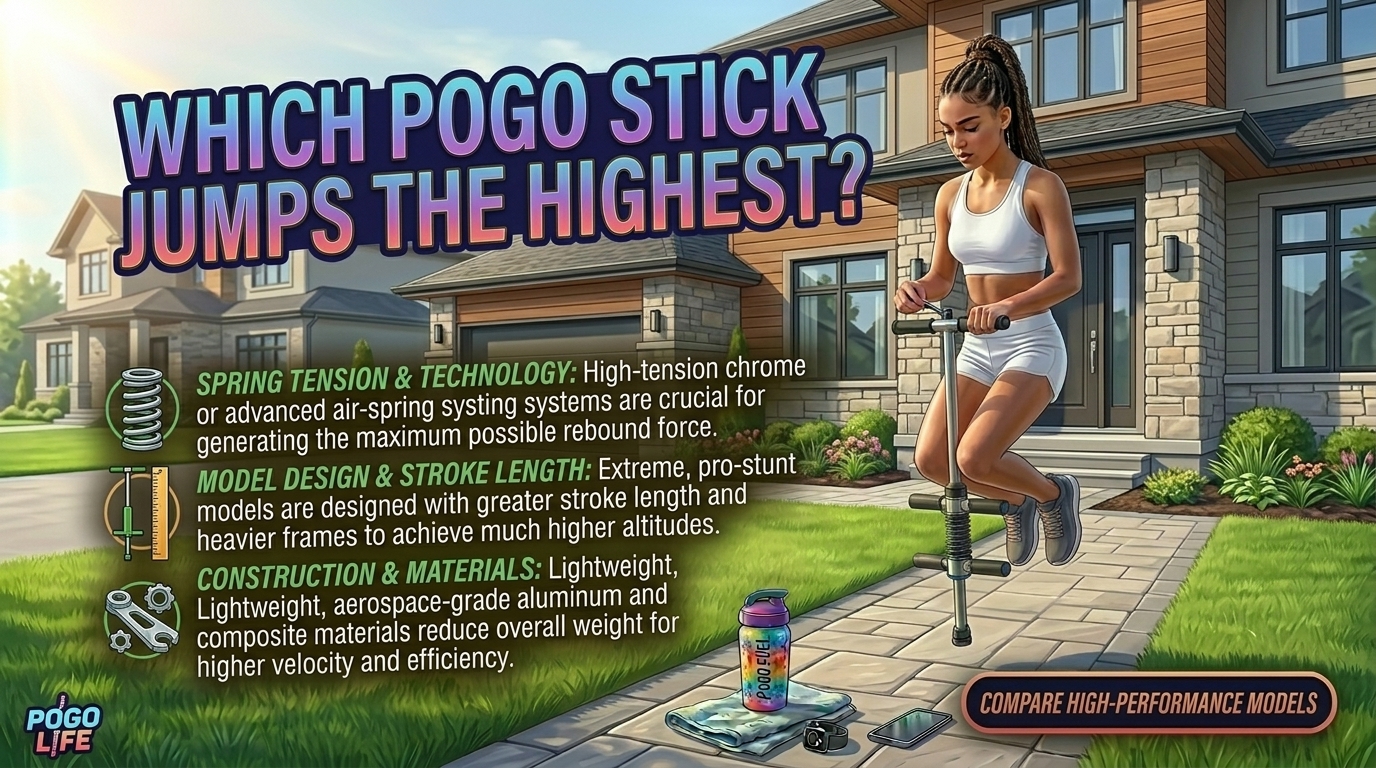
Pogo sticking is no longer just a nostalgic mid-century pastime or a basic playground novelty. Today, the world of pogo jumpers splits into distinct, highly advanced engineering categories: from ultra-safe, squeaking foam hoppers for toddlers to high-performance, industrial-grade pneumatic (air-powered) beasts that can launch full-grown adults over sedans.
But with so many weight categories, spring mechanisms, and structural materials on the market, choosing the wrong pogo stick isn’t just a waste of money—it can lead to immediate frustration or safety issues. A pogo stick that is too stiff for a lightweight child won’t compress at all, while a stick meant for kids will bottom out dangerously under a teenager or adult.
This comprehensive guide breaks down everything you need to know about finding the absolute best pogo stick for your family’s unique age groups, weight ranges, and backyard spaces. From local terrain adjustments across America’s major regional climates to direct technical product comparisons, let’s dive into the world of high-flying backyard entertainment.
1. Anatomy & Engineering: How Modern Pogo Sticks Work
To understand which pogo jumper fits your home, you must first understand the physics and mechanics under the hood. At its core, a pogo stick is a mechanical energy storage and return system. When a rider jumps down onto the footpegs, their kinetic energy and gravitational force compress an internal mechanism. When that mechanism reaches maximum compression, it rapidly releases that stored potential energy, propelling the rider skyward.
+-----------------------------------+
|       T-Bar or Y-Bar Handle       |
|   (Foam Grips vs. Rubber Grips)   |
+-----------------------------------+
                  |
                  | [Upper Shaft]
                  v
+-----------------------------------+
|        Cylindrical Housing        |
|  - Traditional Traditional Spring |
|  - Progressive Elastomer Bands    |
|  - High-Volume Pneumatic Chamber  |
+-----------------------------------+
                  |
                  | [Piston / Inner Rod]
                  v
+-----------------------------------+
|       Non-Slip Foot Plates        |
| (Textured Steel vs. Welded Alloy) |
+-----------------------------------+
                  |
                  v
+-----------------------------------+
|      High-Durometer Rubber Tip    |
|   (Shock Absorption & Traction)   |
+-----------------------------------+
Modern pogo sticks generally fall into one of three internal design categories:
Traditional Steel Spring Systems
The classic steel coil spring remains the backbone of the consumer pogo industry. Encased inside a steel or aircraft-grade aluminum frame, a heavy-duty coil compresses under the footrest plate.
- The Physics: These systems operate via linear spring rates. They require a predictable minimum weight threshold to compress the spring significantly.
- Who it’s for: Perfect for casual backyard play, beginners, and intermediate children/teens. Brands like Flybar and Geospace utilize this classic, incredibly reliable engineering.
Elastomer and Bungee Bouncers
Designed specifically for early childhood development, these systems replace rigid metal components with highly elastic materials.
- The Physics: Instead of compressing a steel coil downward, the rider stretches an ultra-tough elastic bungee cord or bounces on a block of high-density closed-cell foam.
- Who it’s for: Toddlers and young children (Ages 3 to 8). They eliminate the mechanical pinching hazards of traditional metal frames and give lightweight toddlers a satisfying bounce without needing heavy downward force.
Pneumatic (Air-Powered) Systems
The undisputed kings of extreme sports (Xpogo). Instead of a metal spring, these high-end adult pogo sticks feature an air cylinder pressurized with a standard bicycle pump.
- The Physics: Air compresses progressively. The harder you land, the more the air compresses, offering an exponentially more powerful energy return. By adjusting the internal pounds per square inch (PSI), the exact same pogo stick can be tuned to accommodate a 75-pound kid or a 250-pound professional athlete.
- Who it’s for: Older teens, adults, and thrill-seekers looking to clear 5 to 10 feet in the air and execute complex aerial tricks.
2. Why Every Backyard Needs a Pogo Stick: Health & Developmental Benefits
In an era dominated by sedentary digital entertainment, finding an outdoor activity that children and adults actively want to engage with is a major win for parents. Pogo jumping provides a dynamic, full-body workout wrapped in pure entertainment.
Cardiovascular Fitness and Calorie Expenditure
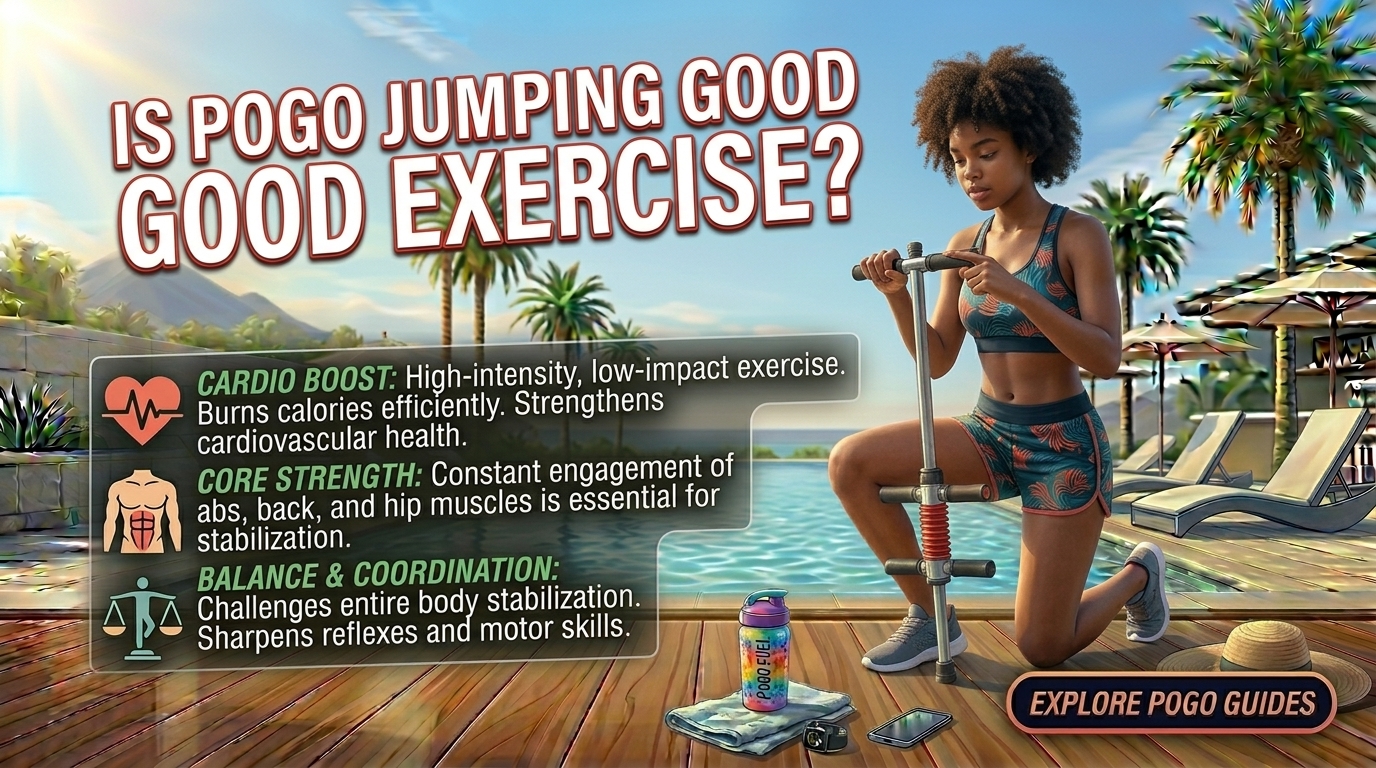
According to sports science data, high-intensity bouncing on a pogo stick can burn between 400 to 600 calories per hour, depending on the rider’s weight and jump intensity. This makes it highly competitive with traditional cardiovascular activities like jogging, cycling, or swimming, while offering a significantly lower barrier to entry for kids who find traditional workouts boring.
Core Stabilization and Balance Training
Maintaining an upright posture on a single, moving point of contact requires lightning-fast micro-adjustments across your musculature. Every single bounce forces the user to engage their:
- Rectus Abdominis & Obliques (Core): Keeps the torso stabilized and prevents falling forward or backward.
- Erector Spinae: Stabilizes the lower back through repeated compression and extension.
- Gastrocnemius & Soleus (Calves): Generates the final downward push on the footpegs.
- Quadriceps & Hamstrings: Absorbs impact forces upon landing, protecting the knee joints.
Proprioception and Vestibular Development
For younger children, pogo jumping is a foundational tool for developing proprioception—the body’s internal awareness of its position in 3D space. The rapid spatial changes and balancing demands stimulate the inner ear’s vestibular system, rapidly improving overall physical coordination, agility, and motor control that translates directly into other sports like soccer, gymnastics, and basketball.
3. The Definitive Core Buyer Directory: Top Pogo Sticks Evaluated
To help you make an accurate buying decision, we have systematically reviewed the top pogo sticks available across four key family demographics.
Category 1: Best for Toddlers & Early Beginners (Ages 3–6)
My First Flybar Foam Pogo Jumper
- Weight Capacity: Up to 250 lbs (though physically sized for small children).
- Mechanism: High-density foam block base with built-in squeaker and heavy-duty flexible bungee cord handle.
- Pros: 100% safe for indoor and outdoor surfaces; completely leaves no marks on hardwood floors; built-in squeaker provides immediate audial feedback that encourages repetitive jumping.
- Cons: Provides a low-altitude hop rather than a true vertical mechanical launch; advanced 5-year-olds may crave a higher bounce quickly.
Category 2: Best for Young Kids & Intermediate Riders (Ages 5–9)
Flybar Foam Maverick Pogo Stick
- Weight Range: 40 to 80 lbs.
- Mechanism: Enclosed metal safety spring wrapped in a protective, durable foam outer shell.
- Pros: Extra-wide, deep-textured non-slip footpegs provide exceptional grip under sneakers; fully enclosed spring housing completely prevents pinched skin or caught clothing; incredibly stable geometry for kids learning to count consecutive bounces.
- Cons: Rigid weight minimum means a child under 40 lbs will find it behaves like a static stilt.
Category 3: Best for Older Kids, Teens & Families (Ages 9–14)
Geospace Jumparoo Boing! Pogo Stick (Medium/Large editions)
- Weight Range: 80 to 160 lbs.
- Mechanism: High-tensile steel spring system with a unique, leaf-spring-inspired handle orientation.
- Pros: Exceptional build quality using thickened structural steel tube walls; features an integrated Y-shaped handle layout that allows for a much more natural, ergonomically relaxed arm posture during sustained use; high-durometer rubber tip provides massive grip on clean concrete.
- Cons: The raw spring can be noisy if not lubricated occasionally; requires a solid base of core strength to maximize height.
Razor Gogo Pogo Stick
- Weight Capacity: Up to 140 lbs.
- Mechanism: Lightweight aluminum folding frame with a high-performance interior coil.
- Pros: Features unique folding footpegs and handlebars, transforming the traditionally awkward, long footprint of a pogo stick into a compact, ultra-portable profile that fits perfectly into a car trunk or suburban garage storage bin.
- Cons: Joint hinges require routine inspection to ensure they are free of debris and fully locked before jumping.
Category 4: Best for Advanced Teens & Adults (Ages 14+)
Flybar Super Pogo 2
- Weight Range: 120 to 210 lbs.
- Mechanism: Heavy-duty, aircraft-grade aluminum vertical frame housing an industrial-grade structural spring.
- Pros: Built like a tank with structural vertical struts; footpegs can be adjusted to different angles to accommodate specialized trick tracking; easily handles adult weights without bottoming out the spring chamber.
- Cons: Quite heavy to carry for extended periods; demands excellent physical fitness.
Vurtego V4 Series (The Professional Pneumatic Titan)
- Weight Capacity: Adjustable via air pressure (Handles riders from 75 lbs to 300+ lbs).
- Mechanism: Custom-machined high-volume pneumatic air chamber.
- Pros: The gold standard of professional and recreational high-altitude bouncing; capable of launching an adult up to 8 to 10 feet in the air; infinitely adjustable simply by pumping air into the valve to stiffen or soften the ride.
- Cons: Premium, high-end investment pricing; requires respect and strict adherence to protective safety gear.
4. Cross-Demographic Comparison Matrix
To quickly see how these top-tier models compare structurally and physically across your family ecosystem, refer to our comprehensive technical breakdown table:
| Pogo Stick Model | Target Age Group | Weight Capacity Range | Internal Mechanism Type | Primary Best Use Case |
| My First Flybar Jumper | Ages 3–6 | Up to 250 lbs | Elastic Bungee / Foam | Safe Indoor & Playroom Introduction |
| Flybar Foam Maverick | Ages 5–9 | 40 – 80 lbs | Enclosed Steel Spring | First True Vertical Backyard Bouncing |
| Razor Gogo Pogo | Ages 6–12 | Up to 140 lbs | Folding Steel Spring | Travel, Portability & Urban Suburbs |
| Geospace Jumparoo Boing! | Ages 9–14 | 80 – 160 lbs | Exposed Steel Coil | Intermediate Core & Endurance Training |
| Flybar Super Pogo 2 | Ages 14+ | 120 – 210 lbs | Aircraft-Grade Alloy Coil | Adult Fitness & Entry-Level Trick Riding |
| Vurtego V4 Series | Ages 14 to Adult | 75 – 300+ lbs (Adjustable) | High-Volume Pneumatic Air | Pro Xpogo High-Altitude & Extreme Sport |
5. Comprehensive Safety Protocol & Injury Prevention Guide
While modern pogo sticks are engineered with advanced safety parameters, they remain vertical momentum devices. Implementing a strict family safety protocol ensures your backyard fun remains free of medical emergencies.
The Essential Safety Gear Quad
Never allow a child or adult to step onto a mechanical pogo stick without the following four safety items properly fitted:
- Consumer Product Safety Commission (CPSC) Certified Helmet: A properly fitted skateboard or bicycle helmet is non-negotiable. Ensure the helmet sits level on the forehead and the chin strap is tightened to allow no more than two fingers of clearance.
- Wrist Guards: Statistically, falling from a pogo stick triggers a natural human reflex to extend the arms to break the fall. High-quality wrist guards featuring rigid plastic splints protect the delicate scaphoid bones from fractures.
- Elbow Pads: Protects the olecranon process (elbow bone) from harsh impact if a rider slips sideways onto concrete or hard-packed earth.
- Knee Pads: Essential for beginner riders who frequently drop to their knees when losing forward momentum.
Establishing the “Safe Launch & Landing Zone”
Before jumping, map out a clear operational perimeter in your yard. A proper pogo zone must meet the following criteria:
- Zero Overhead Obstructions: Look up. Ensure there are absolutely no low-hanging tree branches, clotheslines, patio string lights, or residential power lines within a 12-foot vertical window above the rider.
- Surface Composition: The optimal surface for beginners is smooth, clean, dry concrete or asphalt (such as an open driveway). Packed, dry turf is acceptable for advanced air-powered sticks, but soft grass or mud will completely swallow a traditional spring’s kinetic energy, causing the stick to stall and tip over.
- Debris Sweeps: Always sweep the jumping zone before a session. A single stray pebble, wet leaf, pinecone, or patch of loose sand can cause a high-durometer rubber pogo tip to slip instantly upon landing, throwing the rider off balance.
6. Localized Market Playbook: Adapting to US Regional Environments
A pogo stick’s performance, safety profile, and longevity change drastically based on your local climate, weather patterns, and suburban land layouts. If you are operating bestpogojumper.com in America’s major regional hubs, optimize your use with these specific local environment playbooks. How to choose the right size pogo jumper?
The Northeast Corridor (New York & Washington D.C.)
- The Environmental Challenge: High humidity summers paired with freezing, salt-laden coastal winters mean metal oxidation (rust) is a constant threat to open steel spring pogo sticks stored in outdoor sheds.
- Surface Variables: Dense brownstones and tight suburban driveways mean space is often limited.
- The Pro Tip: Northeast riders should opt for pogo sticks with fully enclosed spring cartridges or aluminum frames (like the Razor Gogo or Flybar Maverick) to keep moisture out. Always store your pogo stick inside a temperature-controlled garage or basement—never leave it exposed to morning dew or frost on a New York patio.
The West Coast (California & San Francisco Bay Area)
- The Environmental Challenge: The beautiful, year-round dry climate of Southern California and the hilly terrains of San Francisco present unique surface considerations.
- Surface Variables: Many San Francisco and Bay Area driveways feature steep inclines or declines.
- The Pro Tip: Never jump on a slope. Pogo sticks require a perfectly perpendicular relationship with the ground to transmit force safely down through the rubber tip. If you bounce on a hill, the tip will slide out from under you. California riders should seek out flat public skateparks, flat concrete backyard patios, or level school blacktops. Look for models with high-traction, multi-directional rubber feet to handle dry, sun-baked concrete surfaces.
The Sunbelt & Gulf Coast (Texas, Florida & Miami)
- The Environmental Challenge: Intense UV radiation and extreme afternoon heat can rapidly degrade the soft plastics, foam grips, and rubber traction tips of outdoor gear. Additionally, coastal sand in places like Miami can easily find its way into the lubrication channels of a pogo stick’s inner piston.
- Surface Variables: Expansive concrete backyard pool decks and wide suburban Texas driveways provide incredible jumping spaces, but the heat is a major factor.
- The Pro Tip: If you live in Florida or Texas, choose pogo sticks that utilize high-density rubber grips rather than open-cell foam grips, as foam can quickly disintegrate under sweat and intense UV rays. Always inspect the rubber bottom tip; if the Texas sun has dried out or cracked the rubber, replace the tip immediately to maintain structural traction. Ensure the shaft is wiped clean of blowing coastal sand to prevent interior scoring of the piston cylinder.
7. Step-by-Step Training Manual: From Your First Hop to 100 Bounces
Mastering a pogo jumper is an incredibly rewarding process that builds immense patience and determination in children. Break down the learning curve using this structured, progressive training program. Kidoozie hop & squeak unicorn pogo jumper.
+-------------------------------------------------------+
|                 STAGE 1: THE DRY RUN                  |
| - Mount a static pogo stick on a soft surface         |
| - Build muscle memory for foot placement               |
+-------------------------------------------------------+
                           |
                           v
+-------------------------------------------------------+
|                STAGE 2: THE ONE-LEAP SNAP             |
| - Plant dominant foot, step up, bounce once          |
| - Immediately dismount to master balanced landings   |
+-------------------------------------------------------+
                           |
                           v
+-------------------------------------------------------+
|               STAGE 3: THE STEP-AND-CHAIN             |
| - Link 3 to 5 consecutive vertical fluid bounces      |
| - Keep eyes forward on the horizon, not down at feet  |
+-------------------------------------------------------+
                           |
                           v
+-------------------------------------------------------+
|             STAGE 4: SUSTAINED ENDURANCE              |
| - Keep vertical alignment at a true 90-degree angle   |
| - Achieve 100+ bounces using core muscle energy      |
+-------------------------------------------------------+
Stage 1: The Dry Run (Static Balancing)
Before trying to bounce, have the child practice mounting the pogo stick while it is stationary.
- Place the pogo stick flat on a patch of firm grass or a thick outdoor rug (this prevents the stick from slipping out).
- Grasp the handlebars firmly with both hands, keeping the stick completely upright and vertical.
- Place your dominant foot squarely in the center of its corresponding footpeg, hugging the frame close to your shin.
- Practice stepping up with the second foot to balance for just a split second before stepping back down. This builds the fundamental muscle memory required for mounting the device smoothly.
Stage 2: The One-Leap Snap
Move onto a flat concrete surface with all safety gear fully secured.
- Stand behind the pogo stick, leaning it slightly back toward your body.
- Place your dominant foot on the peg.
- In one fluid, confident motion, push down with your dominant leg while pulling up on the handlebars, stepping up with your second foot simultaneously.
- Allow the spring to compress and bounce you upward exactly once, then immediately step off the back of the stick, landing cleanly on both feet on the pavement.
- Repeat this drill 20 times. The goal is to eliminate the fear of the landing and train the brain to know exactly how the energy return feels.
Stage 3: The Step-and-Chain
Once the single bounce is mastered, it is time to chain them together.
- Mount the stick using the exact same motion from Stage 2.
- As the stick returns to the earth after the first bounce, do not step off. Instead, immediately drive your weight straight down into the footpegs using your legs while keeping your core tightly locked.
- Crucial Visual Cue: Tell your child to keep their eyes locked on a distant target on the horizon (like a fence post or a garage door handle). If they look straight down at their feet, their head will lean forward, shifting their center of gravity and causing the pogo stick to drift forward and fall.
- Try to achieve three consecutive bounces, then five, then ten.
Stage 4: Sustained Endurance & Advanced Techniques
Once a rider can hit 50 consecutive bounces, they have unlocked true spatial balance. From here, they can begin introducing advanced movement tracking:
- The Hop-Travel: Gently shifting weight forward, backward, or laterally to navigate around obstacles or follow a designated path on the driveway.
- The 180-Degree Pivot: Using core rotation at the peak of a bounce to spin the pogo stick and change facing directions mid-air.
- The One-Hander: Briefly lifting one hand off the grip at the absolute apex of a high bounce, requiring intense core and lower-body stability.
8. Maintenance, Longevity & Storage Optimization
A high-quality pogo stick is a precision mechanical tool. Implementing a simple, ten-minute monthly maintenance routine will ensure your device retains its smooth bounce, maximum energy efficiency, and total structural safety for years to come.
Routine Mechanical Inspection Checklist
- Tip Wear Analysis: The bottom rubber tip is the most critical safety feature on the stick. Inspect it weekly for uneven wear patterns, deep gouges, embedded gravel, or smooth balding patches. If the tip wears down to the internal metal base plate, replace it immediately. Operating a pogo stick with a worn tip will cause it to slip violently on concrete.
- Piston Cleanliness and Shaft Lubrication: Over time, outdoor dirt, dust, and grass clipping residue will mix with the factory grease on the inner moving shaft, creating a gritty paste that increases friction and causes the stick to catch or stutter. Wipe down the inner exposed metal shaft with a clean, dry microfiber cloth. If the bounce feels rough, apply a few drops of a dry silicone-based spray lubricant directly to the sliding shaft. Avoid wet lubricants like traditional WD-40, as they act like magnets for dirt and sand.
- Handlebar Grip Integrity: Ensure the rubber or foam handlebar coverings are securely bonded to the metal frame and do not slide or rotate freely. A slipping grip can cause a rider’s hand to lose structural contact during a high-velocity bounce.
- Structural Weld Audits: Periodically look closely at the high-stress stress points of the pogo stick—specifically where the footpegs are welded to the main frame tube. Look for hairline cracks or structural chipping in the powder coating, which can indicate metal fatigue.
Environmental Storage Protocols
To maximize the operational lifespan of your family’s pogo jumpers, enforce a strict storage rule: Never store a pogo stick outdoors or in an unventilated shed.
- In humid geographic regions like Houston, Miami, or coastal New York, ambient moisture will slowly compromise internal steel springs, creating surface rust that degrades spring performance and creates structural weak points.
- Extreme heat in enclosed metal backyard sheds can warp structural plastics and cause rubber footpads to degrade prematurely.
- Hang your pogo sticks vertically on a sturdy garage pegboard wall or store them horizontally on a clean shelf inside a temperature-controlled home perimeter.
9. Conclusion: Buying with Total Confidence
Investing in a high-quality pogo stick is one of the most effective, rewarding ways to bring healthy, screen-free physical fitness and unforgettable family entertainment right into your own backyard. Whether you are buying a simple, squeaky foam jumper to help your toddler develop foundational motor skills on a rainy afternoon in San Francisco, or purchasing a high-altitude pneumatic engine for your teenager to perform gravity-defying tricks across a wide Texas driveway, matching the user’s exact age and weight to the correct mechanical engineering is the absolute key to success.
Take the time to assess your family’s unique physical profiles, prepare your local driveway or backyard space safely, suit up with top-tier protective safety gear, and follow our step-by-step training manual. Before you know it, your entire family will be counting consecutive bounces, setting new backyard records, and enjoying a high-flying workout that keeps everyone happy, healthy, and moving out in the fresh air.