Complete Toddler Safety & Buying Guide: Best Pogo Jumper for 3-Year-Olds
At age three, toddlers are experiencing an incredible explosion in gross motor development. They are transitioning away from uncoordinated infant steps and diving headfirst into running, kicking, climbing, and—most importantly—jumping.
Jumping is a critical developmental milestone. It builds dynamic ankle stability, strengthens the lower core, and fires up the vestibulocochlear system (the inner ear network responsible for balance). However, if you look at a traditional metal-spring pogo stick, it is immediately clear that these mechanical devices are entirely unsafe for a three-year-old’s skeletal frame and developing reflexes. Traditional models require high minimal weights (usually 40+ lbs) and pose significant tipping hazards.
This is where foam bungee pogo jumpers come in. They offer all the sensory, energy-burning joy of a vertical bounce but are structurally optimized for toddlers.
But with dozens of identical-looking foam toys clogging online marketplaces, what is the absolute best pogo jumper for a 3-year-old?
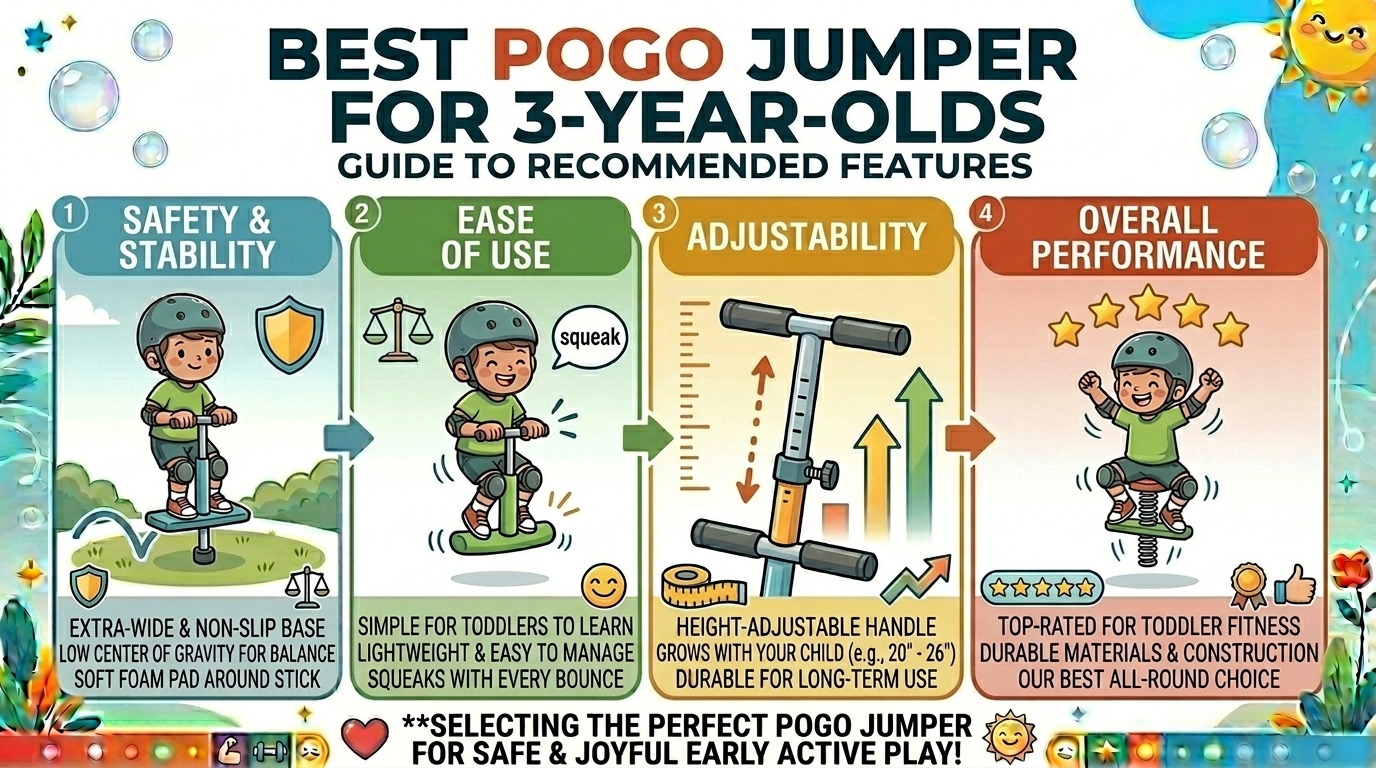
The definitive answer is the Flybar “My First Flybar” Foam Pogo Jumper. It is the gold standard for this age group because it features a wide, slip-resistant NBR/EVA block base, high-tensile double elastic hoses that prevent snapback injuries, an integrated “squeaker” that rewards rhythmic jumping, and full compliance with CPSC safety standards.
Below, we break down the top-tier toddler pogo jumpers on the market, analyze the physics of toddler-safe bouncing, and explain exactly what features to look for to keep your living room floors and your child perfectly safe.
1. Top 3 Best Foam Pogo Jumpers for 3-Year-Olds
1. The Gold Standard: My First Flybar Foam Pogo Jumper
- Core Material: Premium High-Density EVA Foam Base & High-Elastic Rubber Bungee.
- Weight Limit: Accommodates up to 250 lbs (Meaning parents can jump too!).
- The Breakdown: Built by Flybar—a company with over a century of pogo engineering experience—this is the most durable model available. The rubber bungee band stretches smoothly to match a 3-year-old’s height while providing gentle, controlled recoil that caps the maximum bounce height at a perfectly safe 4 inches. It also features soft, sweat-resistant foam handles that match smaller toddler hands perfectly.
2. Best for Durability: New Bounce Toddler Pogo Jumper
- Core Material: Heavy-Duty NBR (Nitrile Butadiene Rubber) + TPE Elastic.
- Weight Limit: Best optimized for weights up to 100 lbs.
- The Breakdown: New Bounce sets itself apart by using highly resilient NBR foam for the base blocks. NBR provides slightly superior tear resistance compared to standard low-grade foams, making it the perfect selection if your 3-year-old plans to take their jumper out onto rough concrete driveways, gravel porches, or backyard grass.
3. Best for Sensory Seekers: Jerify Squeaky Foam Jumper Set
- Core Material: Flexible Closed-Cell Cushion Foam.
- Weight Limit: Supports up to 250 lbs.
- The Breakdown: If you have multiple children or want to set up an active indoor playroom circuit, this multi-pack offers elite value. It features a highly responsive air valve that squeaks instantly upon compression, providing immediate cause-and-effect auditory feedback that occupational therapists use to aid rhythm, timing, and motor planning.
2. The Biomechanical Checklist: What Makes a Jumper 3-Year-Old Safe?
When shopping for a three-year-old, you cannot evaluate toys using the same metrics as older kids. Look for these structural pillars:
                  [ THE TODDLER SAFETY ARCHITECTURE ]
                                  ||
        ======================================================
        ||                        ||                        ||
        v                         v                         v
[ FIXED BAMBOO/FOAM ]    [ COMPRESSED AIR VALVE ]  [ ZERO FRAME SLACK ]
Wide-block footprint      Rhythmic auditory loops  Collapsible bungee band
prevents ankle rolls.     for motor coordination.  eliminates fall damage.
- Wide Base Footprint: A 3-year-old’s ankle-foot complex is still highly flexible and prone to rolling. Look for bases that are at least 10 to 12 inches wide. This wide platform creates an ultra-stable, non-slip base that stays flat on the floor even if the child leans slightly off-center.
- Zero-Frame Architecture (The Bungee Handle): Avoid any toddler toy that claims to be a pogo stick but features a rigid plastic or metal central shaft. Three-year-olds lack the reflex velocity to self-correct a tipping pole. A flexible bungee handle ensures that if they lose balance, the cord goes slack instantly, allowing the child to step safely down to the floor from a height of two inches.
- Audio Feedback Loops: Look for built-in squeakers or audio valves. While adults may find the sound repetitive, to a 3-year-old’s brain, that sound functions as an essential sensory milestone reward. It helps them register success, teaches them to calculate rhythm, and prompts them to practice counting their hops out loud.
3. Floor Safety Metrics: Indoor Play Compatibility
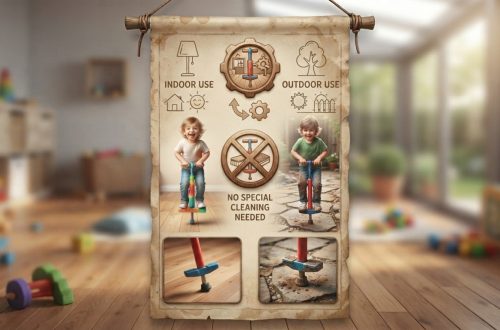
For parents, a massive benefit of a high-quality foam jumper is its indoor versatility. At age three, kids need constant active play, but weather changes often trap them inside.
| Jumper Type | Hardwood Surface Risk | Ceramic Tile Stability | Carpet Performance |
| High-Density EVA Foam (Flybar) | Zero Risk (Non-marring, soft cushion) | Excellent (Suction grip texture) | Good (Requires tight low-pile weave) |
| Traditional Metal Spring Pogo | Extreme Risk (Will gouge/dent wood) | Dangerous (Will crack/shatter tiles) | Poor (Sinks and snags fibers) |
Because premium toddler jumpers utilize soft, non-marring closed-cell foams, your child can bounce straight across expensive oak hardwoods or delicate laminate surfaces without leaving scuffs, scratches, or compression dents.
4. How to Introduce a Pogo Jumper to a 3-Year-Old
Don’t expect your three-year-old to jump onto the platform and complete 50 consecutive hops on day one. Introduce the toy systematically using this pediatric framework:
- The Weighted Step (Days 1-2): Place the foam block on a rug or low-pile carpet. Hold your toddler by both hands and let them simply practice stepping up onto the block and stepping back down. This builds muscle memory for the footpad location without any vertical movement.
- The Bungee Tug (Days 3-4): Show them how to loop their hands through the soft handles and pull upward slightly. This teaches them the concept of tension resistance—they need to understand that pulling up on the handle is what locks their feet securely down onto the base as they ascend.
- The Assisted Hop (Day 5+): Stand in front of your child, hold onto the handlebars alongside them, and lift gently as they bend their knees and hop. Within 48 hours, their motor cortex will map the sequence, and they will be bouncing completely independently.
5. Frequently Asked Questions (FAQ)
Are foam pogo jumpers safe for a 3-year-old’s growth plates?
Yes, absolutely. Unlike real metal pogo sticks which cause a hard, jarring vibration to echo up through the skeletal frame on concrete, foam jumpers are low-impact toys. The thick block of closed-cell EVA or NBR foam acts as a primary buffer, compressing under the child’s weight and completely absorbing the landing impact. This protects their developing growth plates and joints perfectly.
How long should a 3-year-old play on a jumper each day?
For toddlers aged three, the ideal session length is 10 to 12 minutes, repeated up to two times per day. Toddler ankle stabilizers and core muscles experience fatigue quickly. Enforcing a break every 5 minutes ensures they don’t experience overexertion or twist an ankle due to muscle exhaustion.
Do these toys work on carpet?
Yes, foam pogo jumpers perform well on low-pile carpets, rugs, and foam play mats. Avoid using them on exceptionally thick shaggy carpets, as the deep fibers can decrease the rebound feedback, making it slightly harder for a lightweight 3-year-old to generate a satisfying squeak.
Summary: Elevating Early Childhood Physical Literacy
Investing in a premium foam pogo jumper is an easy way to inject healthy, low-impact exercise into your toddler’s daily routine. By bypassing the dangerous, rigid constraints of metal springs and leaning into the safe, forgiving design of flexible bungee lines and wide EVA foam pads, models like the My First Flybar give your three-year-old a head start on foundational athletic milestones. They will build elite core stability, conquer key coordination challenges, and burn off restless energy—all while flashing a massive, bouncing smile.
Keywords: best pogo jumper for 3 year old, my first flybar toddler review, safe indoor jumping toys, foam pogo stick age limit, gross motor skills toys for 3 year olds, sensory heavy work toys for toddlers, non marring indoor active toys.